USPS postmark changes and April 15 filing risk
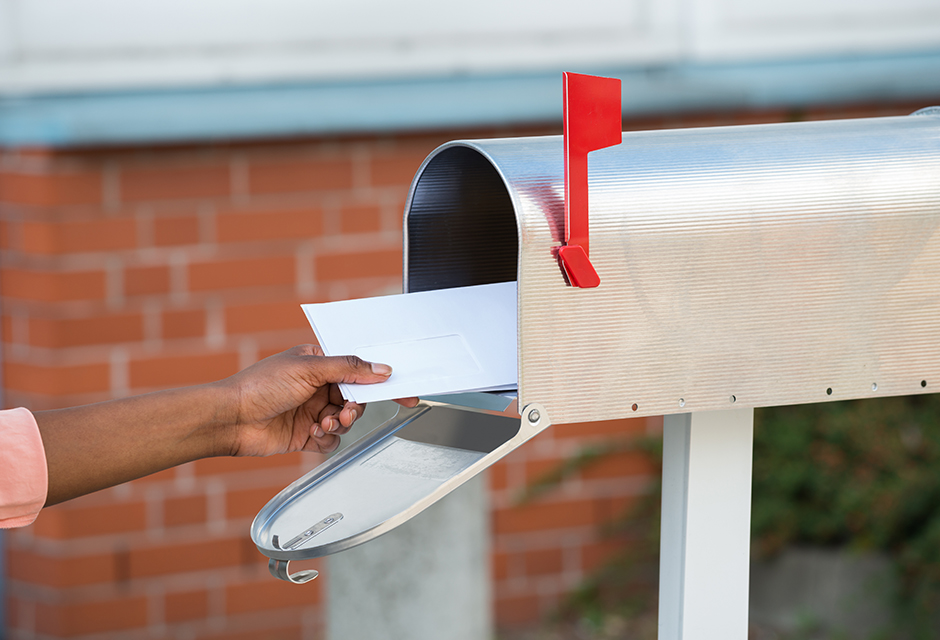
As April 15 approaches, tax offices and clients may still rely on the mail for tax payments and other last-minute paper filings. If you’ve ever reassured a client that something was “mailed on time,” it’s worth taking a closer look at how confident you can be in that statement.
A finalized U.S. Postal Service (USPS) rule, effective Dec. 24, 2025, clarifies how postmark dates are applied. The tax law under §7502 hasn’t changed; postmark dates determine timeliness. But the operational reality behind postmarks has, and that shift increases filing risk for paper submissions tied to strict deadlines.
Quick takeaways for tax pros
- Machine-applied postmarks now reflect processing date, not drop-off date.
- A next-day postmark can make an otherwise timely filing late under §7502.
- Not all mail receives a postmark, creating documentation gaps.
- Manual postmarks and proof of mailing are now critical risk controls.
What the USPS rule changed
The USPS adopted §608.11, “Postmarks and Postal Possession,” into the Domestic Mail Manual. Under this updated final rule, most machine-applied postmarks reflect the date of the first automated processing operation at a USPS facility, not the date the item was dropped in a mailbox or accepted at a retail counter.
In practical terms, mail dropped on April 15 may not be processed until April 16. The machine-applied postmark will reflect April 16.
The rule also clarifies that not all mail receives a postmark, and the absence of a postmark doesn’t necessarily mean the USPS never accepted the item. From a tax perspective, that clarification offers little protection when a filing deadline depends on what appears on the envelope.
Why this matters under §7502
Section 7502, as interpreted by Treasury regulations, governs timely mailing treated as a timely filing. For mailed returns, payments, IRS notice responses or other documents, the USPS postmark date controls whether the filing is considered timely if the IRS receives it after the due date.
If the postmark is dated after the deadline, the document is late. It doesn’t matter when the taxpayer mailed it.
The legal standard hasn’t changed. What’s changed is the reliability of assuming that a machine-applied postmark reflects the mailing date.
A common April 15 scenario
A taxpayer drops an extension payment in a USPS mailbox on April 15. The envelope isn’t processed until the evening of April 16 at a regional facility. The machine-applied postmark is April 16.
Under §7502, the IRS treats the payment as late. Without a manual postmark, a Certificate of Mailing, a certified mail receipt or another acceptance record dated April 15, the taxpayer has no objective evidence of timely mailing.
This is no longer a rare edge case. It’s an operational reality under current USPS logistics.
What postmark processing means for your practice
Paper hasn’t disappeared. Elections, certain amended returns, responses to notices and some payments still move through the mail.
Now is the time to tighten internal controls:
- Build earlier internal cutoffs for time-sensitive paper filings.
- Require in-person USPS acceptance for deadline-driven mail.
- Obtain a manual postmark at the retail counter when timing matters.
- Use Certified Mail or Registered Mail, which under §7502(c), serves as prima facie evidence of timely mailing unless the IRS proves otherwise.
- Consider an approved private delivery service when appropriate.
Mailbox drop-offs near a statutory deadline are no longer a defensible risk management practice.
This also reinforces a broader best practice many firms already follow: when e-filing is available, it’s the most reliable way to meet filing deadlines. But when paper is required, documenting the mailing date is a key compliance safeguard.
How to approach mailed deadlines going forward
The USPS did not change the tax law. A document is still timely only if the postmark is dated on or before the filing deadline.
The USPS final rule clarifies how that date is determined. That clarification makes it riskier to rely on routine mailing practices, especially during peak filing periods.
When a postmark determines timeliness, obtain it intentionally. If you can’t verify the mailing date, you can’t rely on it.
For a deeper look at how mailing risk intersects with broader post-filing exposure, attend NATP’s March 24 webinar, Resolving Common 2026 Issues and Notices, or watch it on demand after the live event.
About the author(s)

NATP Staff