TIGTA report highlights IRS canceled contracts

A recent report from the Treasury Inspector General for Tax Administration highlights ongoing IRS challenges that directly affect tax professionals and their clients.
With more than 340 canceled contracts, the IRS could avoid spending up to $645 million in the future. However, many of these contracts affect taxpayer-facing services, which could slow processing times and disrupt service delivery. The breakdown of those contracts and potential savings are illustrated below.
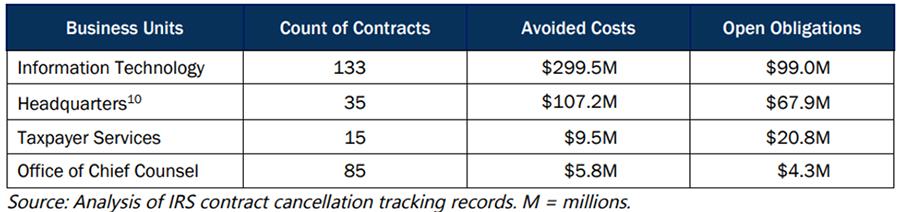
While the TIGTA report focuses specifically on canceled contracts and potential service gaps, it also fits into a broader pattern of IRS operational pressure that tax professionals continue to navigate.
Staffing shortages and workload pressures
The IRS continues to operate with reduced staffing while managing increasing workloads and new responsibilities. Staffing challenges can lead to delays in tax return processing, slower responses to IRS notices and inconsistent handling of taxpayer issues. At the same time, the agency is expected to implement new tax law changes and improve taxpayer service.
Processing delays and service issues
The IRS canceled contracts supporting several services, including e-file modernization, which may lead to more processing delays. Backlogs, particularly for amended tax returns, and reliance on manual processes will likely continue to affect turnaround times. Taxpayers may also face difficulty navigating IRS online tools.
Other potentially affected services named in the report include updates to individual and business return filing, interpreter services, Taxpayer 180 support services, Taxpayer First Act initiative support and expert witness testimony.
Enforcement and compliance trends
The IRS continues to focus on improving tax compliance, especially for complex returns and higher-income taxpayers. At the same time, reduced staffing may create uneven enforcement. Some taxpayers may face increased IRS scrutiny, while other areas may see gaps in oversight.
Automation and artificial intelligence
The IRS is expanding the use of automation and artificial intelligence to improve tax administration efficiency. These tools are used to process returns, select audits and manage taxpayer interactions. While IRS automation can improve speed, it also increases the risk of system errors. Incorrect notices, delayed processing and unnecessary IRS audits can result from incomplete data or system limitations.
What these canceled IRS contracts mean for tax professionals
Canceled contracts that directly impact taxpayers mean more delays and longer processing times. The TIGTA report reinforces several key points for tax professionals.
- Expect inconsistent IRS processing. IRS response times and case handling may vary due to system limitations. Monitor client accounts for unexpected changes.
- Prepare for automated IRS interactions. Automation will continue to shape IRS notices and audit selection. Use online tools but verify results.
- Monitor IRS compliance trends. Enforcement priorities may shift based on resources and technology. Stay up to date on guidance and operational changes.
- Communicate IRS delays to clients. Clear communication helps manage expectations and reduce client frustration. Respond promptly to notices.
About the author(s)

NATP Staff