This tax season, should you use a tax pro or go it alone?

Tax season 2026 is here, and millions of Americans are at a crossroads when deciding whether to handle their tax returns on their own or work with a tax professional. While there’s clear value in using a knowledgeable and reputable tax professional, some taxpayers have a simple enough financial situation to prepare their returns comfortably on their own.
Preparing your own tax return
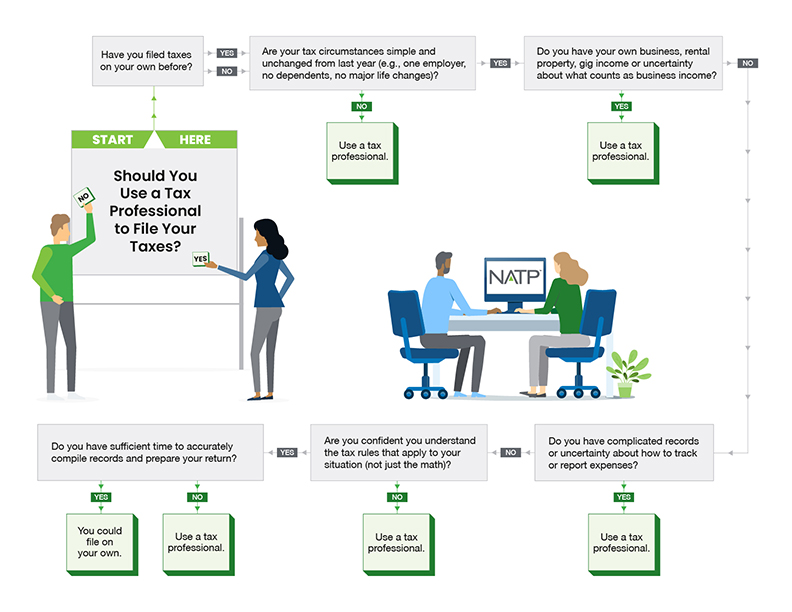
Preparing your own tax return can make sense if your financial situation is relatively simple or you’re comfortable working through the details. For example, a single taxpayer with no dependents, one Form W-2 employer and straightforward deductions may feel comfortable filing on their own.
As a return begins to include additional income sources, life changes, or more complex credits and deductions, reporting requirements can quickly become less obvious. That’s often when working with a tax professional becomes valuable. Tax professionals handle these situations every day and know where to look when the rules become more complex.
Should you work with a tax professional to file your taxes?
Working with a tax professional can be helpful if you’re unsure how to navigate tax software, have questions about eligibility for certain tax benefits or need guidance on more complex rules. A tax professional may also identify credits or deductions you qualify for but might otherwise overlook.
That guidance can be especially valuable as tax laws continue to change. Recent legislation, including the One Big Beautiful Bill Act (OBBBA), has introduced new provisions and planning considerations that aren’t always intuitive, such as expanded tip and overtime deductions, changes affecting certain credits and new rules tied to income thresholds.
Working with a tax professional can also be valuable when life changes affect a return, such as selling a home, getting married or divorced, changes in filing status, adding dependents or starting a business. In those situations, having an experienced tax professional involved can help ensure the return is prepared accurately and reflects the taxpayer’s full tax picture.
Here's a handy flowchart to help you make your decision.
What documents do I need to bring to my tax appointment?
This checklist covers the most common items your tax preparer will need. Not every item applies to every taxpayer, but bringing what’s relevant helps avoid delays.
1. Personal information and identification
- Social Security numbers or ITINs and birthdates for yourself, your spouse and any dependents
- Government-issued photo ID
- Direct deposit information for refunds
- Prior-year tax return
- IRS IP PIN, if issued
- Any IRS or state notices or letters received during the year
2. Income documents
- Form W-2 for wages and salaries
- Forms 1099-INT, 1099-DIV and 1099-B for interest, dividends and investment activity
- Brokerage statements showing capital gains and losses
- Form 1099-NEC or Form 1099-MISC for contract, gig or freelance work
- Form 1099-K for third-party payment reporting
- Form 1099-G for unemployment compensation or state tax refunds
- Schedule K-1 for partnerships, S corporations or trusts
- Other income, including tips not on a Form W-2, prizes or awards, hobby income or canceled debt (Form 1099-C)
3. Proof of deductions and adjustments
- Charitable contribution receipts or acknowledgments
- Mortgage interest statement (Form 1098)
- Student loan interest statement
- Records for IRA, Roth IRA, SEP, SIMPLE or HSA contributions
4. Business and self-employment documents
- Income and expense records
- Receipts for business expenses
- Mileage logs
- Prior-year depreciation schedules
- Forms issued to contractors, if applicable
5. Rental property documents
- Rental income and expense records (including partial-year or partial-use rentals)
- Mortgage interest and property tax statements
- Insurance, repairs and maintenance records
- Prior-year depreciation and passive loss carryforward information
6. Education expenses
- Tuition statements (Form 1098-T)
- Records for books and required course materials
- Student loan interest paid
- §529 plan contributions or distributions
7. Retirement and investment activity
- Forms reporting retirement contributions or distributions
- Records of rollovers or conversions
8. Health insurance and medical coverage
- Form 1095-A, Health Insurance Marketplace Statement, if applicable
- Form 1095-B or Form 1095-C
- Form 1099-SA for HSA distributions
- Out-of-pocket medical, dental and vision expenses
9. Child and dependent care
- Child or dependent care provider information for each provider, including EIN or Social Security number
- Amounts paid for care
- Custody agreements, if relevant
10. Taxes paid and payments made
- Federal and state estimated tax payments
- Extension payments
- Amounts paid with a prior-year return
11. Homeownership and property transactions
- Property tax statements
- Closing statements for property bought or sold
- Records of casualty or disaster losses, if applicable
12. Other relevant information
- Cryptocurrency or digital asset transaction records
- Any additional documents related to income or expenses not listed above
Note: This checklist covers common situations, but it doesn’t apply to every taxpayer. Contact your tax preparer before your appointment if you’re unsure what applies to you or if your situation changed during the year.
If you’re looking for a qualified tax professional, the National Association of Tax Professionals (NATP) offers a searchable directory to help you find an experienced tax pro in your area.
About the author(s)

NATP Staff