Federally declared disaster vs. qualified disaster loss
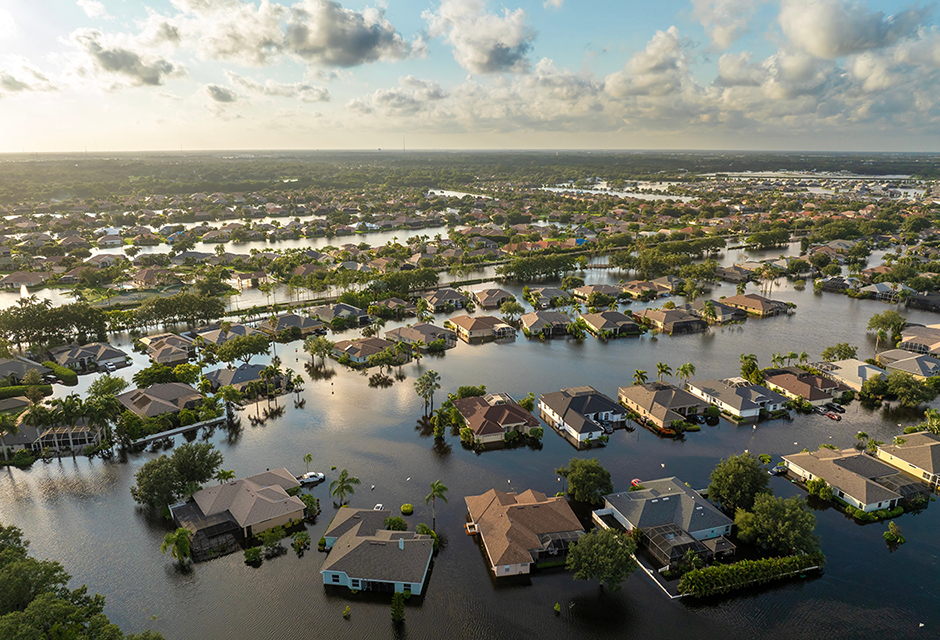
When disaster strikes, tax relief often follows. But not all disasters are treated the same under the Internal Revenue Code (IRC). For tax professionals, understanding the difference between a federally declared disaster and a qualified disaster loss is essential. The terms sound similar, yet the tax treatment can vary significantly.
What is a federally declared disaster?
A federally declared disaster is an event the U.S. president determines warrants federal assistance under the Robert T. Stafford Disaster Relief and Emergency Assistance Act (Stafford Act). Under the act, the two main presidential declaration types are major disaster declarations and emergency declarations. These declarations may be issued for events such as hurricanes, wildfires or floods.
The Federal Emergency Management Agency (FEMA) maintains the official list of federally declared disasters, and each one is assigned an identifying number. Only taxpayers in those designated areas can access certain tax relief provisions. From a tax standpoint, this classification matters because it determines when individuals can claim personal casualty losses. Since the Tax Cuts and Jobs Act (TCJA) took effect in 2018, personal-use property losses are generally deductible as casualty losses only if tied to a federally declared disaster.
However, the deduction comes with restrictions:
- A $100 reduction applies per casualty event
- Total losses must exceed 10% of adjusted gross income (AGI)
- Losses must be reduced by insurance or expected reimbursements
Taxpayers must also itemize deductions on Schedule A (Form 1040) to benefit.
What is a qualified disaster loss?
A qualified disaster loss is a narrower category, a subset of the federally declared disasters. It applies only to specific disasters identified by Congress and tied to federally declared disasters within certain timeframes and, in some cases, for specifically named events.
These include events such as:
- Hurricanes Harvey, Irma and Maria
- The California wildfires in 2017 and January 2018
Importantly, not every federally declared disaster qualifies. The definition is statutory and time limited. Why does this matter? Because qualified disaster losses receive the more favorable tax treatment.
Key tax advantages of qualified disaster losses
Qualified disaster losses remove some of the biggest barriers taxpayers face when claiming casualty losses.
Here’s what changes:
- The per-casualty reduction increases from $100 to $500
- The 10% of AGI limitation is eliminated
- Taxpayers can claim the loss without itemizing
That last point is especially valuable. The net loss can be added to the standard deduction, making relief accessible to both taxpayers who itemize and those who do not. Like other casualty losses, the amount must still be reduced by insurance reimbursements. Additionally, these losses are reported on Form 4684, Casualties and Thefts, but the reporting path differs slightly if the taxpayer does not itemize.
Side-by-side comparison
The distinction becomes clearer when viewed side by side:
- Federally declared disaster:
- Broad category of presidentially declared events
- Required for most personal casualty loss deductions
- Subject to $100 and 10% of AGI limits
- Requires itemizing deductions
- Qualified disaster loss:
- Congress-identified subset of specific federally declared disasters
- Applies only to personal-use property losses
- Uses a $500 reduction, but removes the AGI limitation
- Can be claimed with either the standard or itemized deductions
Planning considerations
This distinction is more than academic. It directly affects how you advise clients. Start by confirming whether the event is a federally declared disaster. Then determine if it meets the narrower definition of a qualified disaster loss, as identified in the Form 4684 instructions and IRS guidance for the applicable tax year.
Documentation is another key area. Encourage clients to retain:
- Insurance reports
- Repair estimates
- Photos of damage
- FEMA or local disaster documentation
Safe harbor valuation methods may also simplify compliance when determining the decrease in fair market value.
Final takeaway
A federally declared disaster opens the door to individual casualty loss deductions. A qualified disaster loss widens that door. For tax professionals, knowing the difference can determine whether a deduction is available at all, or whether it provides a significantly greater tax benefit. Understanding where a client’s loss falls ensures accurate reporting, better planning and stronger client outcomes. Staying current on disaster relief rules is not just compliance. It is an opportunity to deliver meaningful guidance when clients need it most.
Learn more at NATP’s May 12 Understanding Tax Impacts of Casualty Losses and Ponzi Schemes Webinar, also available on demand.
About the author(s)

NATP Staff