Disaster casualty loss tax rules for 2025 and 2026 returns
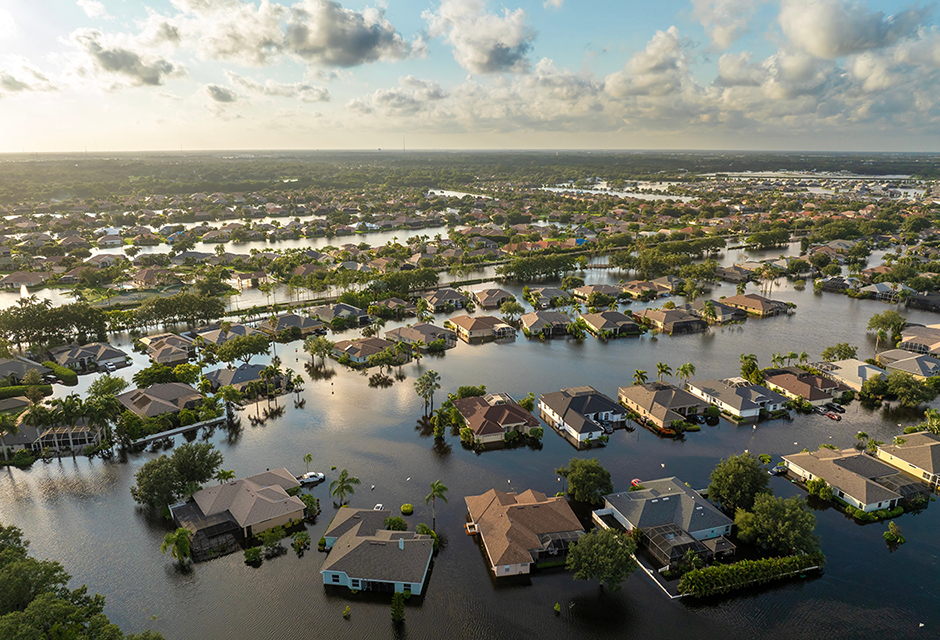
A disaster declaration can trigger different forms of tax relief, but it does not tell you which set of casualty-loss rules apply. For personal-use property, first determine whether the loss clears the basic deductibility rules. Next, determine whether it qualifies for the more favorable qualified net disaster loss rules under §165(h)(6).
First, check basic deductibility
Business or profit-motivated casualty losses follow §165(c)(1) or (2) and are not subject to the personal-use $100 floor or 10%-of-adjusted-gross-income (AGI) threshold. Personal-use losses follow §165(c)(3) and §165(h).
For tax years beginning after Dec. 31, 2025, §165(h)(5) generally limits the deduction for personal casualty and theft losses to losses attributable to a federally declared disaster or a qualifying state-declared disaster. The One Big Beautiful Bill Act (OBBBA) added the state-declared-disaster category and made the limitation permanent. Nondisaster personal casualty losses may still offset personal casualty gains.
For this basic deductibility test, a federally declared disaster can be either a major disaster or an emergency under the Stafford Act. A state-declared disaster must be a natural catastrophe, or a fire, flood or explosion, that the governor (or D.C. mayor) and the Treasury secretary determine caused damage severe enough to warrant the casualty-loss rules.
If a deductible personal loss does not qualify under §165(h)(6), the usual $100-per-casualty reduction and 10%-of-AGI threshold apply. The taxpayer generally must itemize to claim the deduction, and the loss must reflect insurance and other reimbursements.
A state-declared disaster alone does not qualify for the §165(i) prior-year election, which remains tied to federally declared disasters occurring in a disaster area.
Second, test for qualified net disaster loss treatment
The Doug LaMalfa Federal Disaster Tax Relief Certainty Act added §165(h)(6), effective for tax years beginning after Dec. 31, 2024. For these years, the temporary qualified-disaster-loss provisions no longer apply. The current statute instead asks whether the taxpayer has a qualified disaster-related personal casualty loss and, after netting, a qualified net disaster loss.
A qualified net disaster loss is generally the excess of qualified disaster-related personal casualty losses over the relevant personal casualty gains. First determine whether the client's loss is a qualified disaster-related personal casualty loss.
A qualified disaster area is an area for which the president declared a major disaster under §401 of the Stafford Act when the disaster's incident period begins on or after Dec. 28, 2019, and before Jan. 1, 2027. The loss must arise in that qualified disaster area on or after the first day of the incident period and be attributable to that disaster.
Note that this test is narrower than the basic federally declared disaster category. An emergency declaration alone does not satisfy §165(h)(6).
When §165(h)(6) applies, the per-casualty reduction is $500 and the 10%-of-AGI threshold does not apply to the qualified net disaster loss. A taxpayer may also claim the qualified net disaster loss without itemizing under §63(b)(8).
How to tell if the loss qualifies for §165(h)(6)
FEMA does not label an event a “qualified disaster” for tax purposes. It supplies the declaration facts; the preparer applies §165(h)(6). Use FEMA's Disasters and Other Declarations search and disaster detail page to verify.
- The declaration is a Major Disaster Declaration under §401 of the Stafford Act, generally shown by FEMA with a DR number, rather than an Emergency Declaration or Fire Management Assistance declaration.
- The client's property is in an area covered by that major disaster declaration.
- The incident period began on or after Dec. 28, 2019, and before Jan. 1, 2027.
- The personal casualty loss arose in that area on or after the first day of the incident period and was attributable to that disaster.
If those requirements are met, the loss is a qualified disaster-related personal casualty loss and uses the $500 per-casualty floor. After the required netting against personal casualty gains, any excess is the qualified net disaster loss. That net loss is not subject to the 10%-of-AGI threshold and may be claimed without itemizing.
For 2025 returns, watch for updated instructions. The LaMalfa Act applies §165(h)(6) to tax years beginning after Dec. 31, 2024, and supersedes the temporary provisions. But as of Sept. 29, 2026, the posted 2025 Form 4684 instructions still use the older framework and OBBBA date window. Determine eligibility under current law and check IRS.gov/Form4684 for current filing guidance. Also confirm that your software reflects the change. NATP will continue monitoring Form 4684 and Pub. 547 for IRS updates on how the new §165(h)(6) rules should be applied on 2025 and 2026 returns.
For more on calculating and reporting casualty losses, watch NATP's 2026 Understanding Tax Impacts of Casualty Losses and Ponzi Schemes on-demand webinar.
About the author(s)

NATP Staff