4 reasons to implement AI in your tax business now
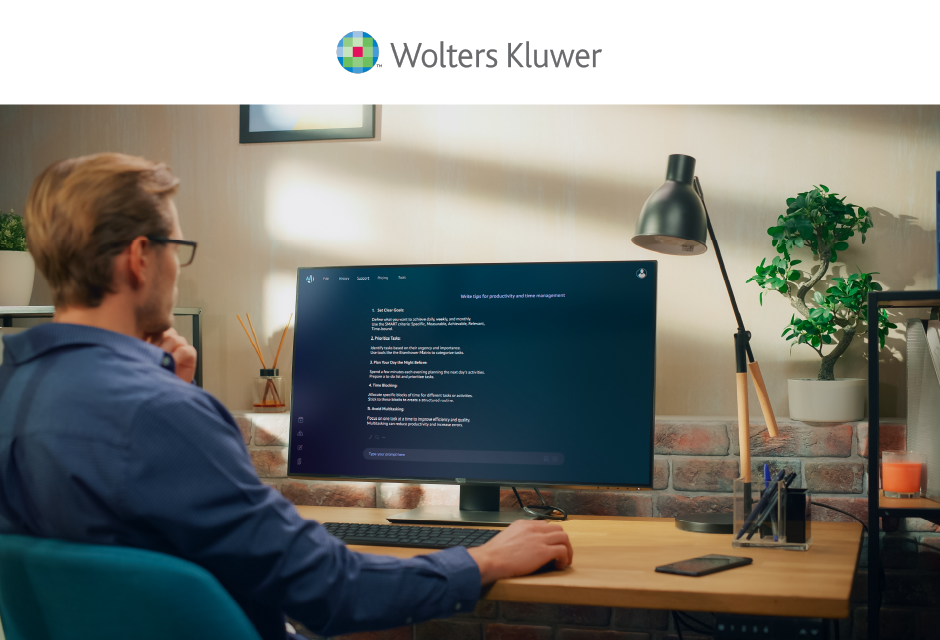
AI is being talked about everywhere right now. Admittedly, to the routine casual observer, said talk can get a bit tiring, especially if one does not fully understand the importance of the technology and its benefit to the tax pro specifically.
Fortunately for us, the recent AI advances in the tax prep space allow us to discern some of the technology’s most enduring and proven qualities. Let us start with four key AI benefits as experienced and relayed by AI early adopters.
1. AI-driven tax technology is user-friendly for tax pros of all ages.
Seldom do you find a sophisticated, powerful tech product with a short learning curve. However, this is the case for most iterations of integrated AI tools that currently exist or will soon exist in leading tax preparation software programs.
What is meant by a ‘short learning curve’? Think of easy actions such as turning on your computer, logging into your tax software, typing or speaking a legible question. You get the drift. If you can do these actions (plus a few others), you can successfully benefit from AI technology in your tax business. In short, it is truly out-of-the-box technology.
2. AI is worth implementing regardless of where you are in your business journey.
One common rebuttal to adopting modern technology by older, more seasoned tax pros is the following reasoning: “I’m getting close to retirement, so the effort and cost to implement new technology isn’t worth my time.” Au contraire.
While younger tax preparers get excited by the productivity-enhancing benefits AI can bring in helping them do the equivalent of 12 hours of work in an 8-hour day, veteran tax preparers have much to get excited about as well. In fact, for the seasoned tax pro looking to scale back, AI has the potential to help them do 8 hours of work in the span of 6 hours.
3. AI makes you and your staff more productive and profitable.
As alluded to in the previous point, using AI to save time opens valuable hours for both the owner and staff to focus on other profitable areas of tax work. Whether that time savings is used to schedule extra tax return appointments or take on a valuable payroll client, the choice is up to you.
On the other side, with these same time-saving gains, a tax shop owner can just as easily scale back their staff labor costs if keeping the same or less clientele numbers are desired. As the saying goes, time is money.
4. AI improves tax pro and customer interaction.
Another enduring quality of AI technology is the ability for AI-powered, customer-facing tools to make your clientele more self-sufficient and involved in the tax return process.
For instance, the laborious and time-consuming tasks of tax document collection and return data entry (often shouldered by the tax preparer) can easily be delegated to an online AI widget, where a camera snapshot of a customer’s W-2 can be uploaded and accurately pre-filled into a 1040 form.
This simple function alone could shave off considerable time on every tax return that flows through your office. The kicker is, most taxpayer customers like having this flexibility and control.
In conclusion, AI is quite different than any other technology the tax industry has seen in a long while. With that said, tax pros should give it serious consideration when reviewing the previous benefits listed here (and others beyond the writings of this article).
Want a more in-depth look at how AI can impact your business for the better? Register to join an upcoming free webinar titled “The Future Ready Tax Preparer: The Case for Implementing AI in Your Tax Business” on Thursday, July 10, at 2 p.m. ET. In this one-hour webinar, attendees will receive both a high-level, all the way down to an intimate understanding of how AI can assist them with respect to important tax workflow tasks. 1 CPE will be offered.